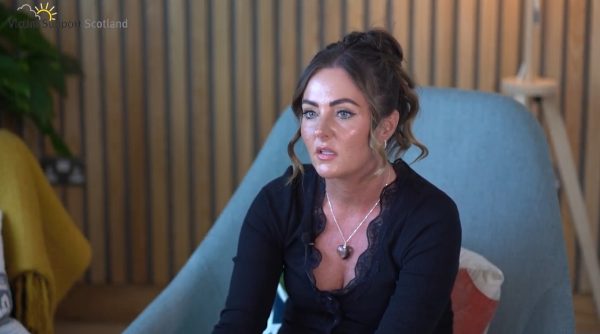
Families of knife crime victims speak out to call for change
Three people who have lost a family member to knife crime have shared their stories and made a call for change in how knife crime is dealt with in Scotland.

The Victims, Witnesses, and Justice Reform Bill is currently at Stage 3, with debates to take place in Holyrood on return from the Scottish Parliament’s summer recess. It’s a landmark bill designed to improve the experience of victims and witnesses in the justice system.
This Bill is incredibly important and has the potential to create significant positive change for people impacted by crime and make the criminal justice system more trauma-informed and transparent.
Stage 3 is our last chance to make sure that certain changes go into law before the Bill becomes an Act.
The Bill features several key aspects that Victim Support Scotland is strongly campaigning for. These areas are of central importance and have been the topic of considerable debate as the Bill has moved through Parliament.

From August 2025, we will be running a campaign to emphasise how crucial it is that these amendments and key elements are included in the Bill. This will involve several media articles, social media posts, and the creation of videos to highlight the impact on victims and their families.
We urge our partners and the wider public to get behind us as we campaign for these vital changes to legislation. You can find more detail about what they all mean further down this page.
This page also features social media assets that you can share on your own channels. We welcome and are grateful for any support you can provide, whether that’s for our campaign as a whole or for a specific amendment that has particular relevance for you or your organisation.
This amendment would place a statutory obligation on the Parole Board to consider a prisoner's failure to disclose information regarding a victim's remains when deciding whether or not to grant parole.
It is currently known as ‘Suzanne’s Law’ in Scotland after Suzanne Pilley, who was murdered by David Gilroy in 2010. Although her remains have never been found, Gilroy was sentenced to life in 2012.
In England and Wales, there is already similar legislation known as ‘Helen’s Law’, and campaigners in Ireland are likewise currently calling for the creation of ‘Charlotte’s Law’.
This amendment would change Police Scotland’s current ‘opt-in’ system for referring victims of crime to support services. Currently, victims of crime who report it to the Police have to actively agree to being referred to services like Victim Support Scotland.
Under the new amendment, victims would automatically be referred instead, with an ‘opt-out’ system in place. This would go a long way to stop people from ‘falling through the cracks’ and not being able to access support.
Often at the point of crime, people have experienced trauma and cannot process what they are being asked to ‘opt-in’ to. They are also only asked once, usually right after the crime takes place, and sometimes not at all.
GDPR is sometimes cited as a reason for referrals not being automatic. But in England, Wales, and Northern Ireland, which operate under the same GDPR legislation, several police forces have already successfully adopted the opt-out system - proving it is possible.
Police referrals to Victim Support Scotland are at some of their lowest ever levels – dropping from 101,681 referrals in 2016/7 to the most recent figure of 10,314 – just 10% of the 2016/17 figure. Our hope is that changing to an opt-out system would improve these figures dramatically.
Not Proven is unique to Scots Law and dates back to an obscure 17th century law. It has been described as a “historical accident”.
There are so many reasons that Not Proven needs to be abolished. For one, there is no official or legal definition of Not Proven – it is confusing both for victims, juries and the general public.
The implications of a case being found Not Proven are exactly the same as Not Guilty, with the accused being judged innocent in the eyes of the law. Returning Not Proven as a verdict fails to provide closure for victims and creates a sense of injustice.
A Not Proven verdict can also have a negative impact on the accused, because, while it returns the same outcome as Not Guilty, it often does not absolve them completely of suspicion.
Abolishing the Not Proven verdict will improve the fairness, clarity and transparency of decision-making in criminal trials.
A Victims and Witnesses Commissioner for Scotland would see the creation of a new Scottish public body, independent of the Scottish Government and accountable to the Scottish Parliament.
The Commissioner would be tasked with supporting and promoting the rights and voices of victims and witnesses within the criminal justice system. They would also hold criminal justice agencies to account in upholding their responsibilities in line with the Victims’ Code.
This new role is badly needed. Currently, victims and witnesses have no official voice in the justice system. While organisations like VSS can help advocate on their behalf, we have no official powers to hold government agencies to account.
The Commissioner would provide a statutory foundation for victims and witnesses’ voices to be heard and raise awareness of their rights and experiences more widely.
There is clear demand for this role to be established, and we ask you to join us in making sure that this amendment is carried into law.
Make your voice heard and help us spread the word on social media!
We’ve created shareable assets that you can use across your own channels, highlighting our campaign in general and the four key amendments we are calling for. If you are sharing on behalf of another organisation, there is space to add your own logo in the bottom right corner of the images.
Download them below, and don’t forget to tag VSS on the following channels:
Instagram: @victim_support_scotland
Facebook: Victim Support Scotland
LinkedIn: @victim-support-scotland
Three people who have lost a family member to knife crime have shared their stories and made a call for change in how knife crime is dealt with in Scotland.

Victim Support Scotland has unveiled a new 5-year strategy setting out its aims for supporting victims of crime in a rapidly changing justice landscape.

A new partnership between VSS and the Scottish Ambulance Service will help patients access support after crime.
0800 160 1985
Call our free support helpline from 8am – 8pm Mon-Fri, and 10am – 4pm Sat-Sun
Chat with our free support helpline from 8am – 8pm Mon-Fri, 10am – 4pm Sat-Sun